General meaning
Justice asks you to look at a situation without embellishment. It isn’t about who gets lucky; it’s about the link between an action and its result: what you plant is what grows. That’s why it so often appears when you’re taking stock, signing papers, choosing between two options, or finally calling things by their real names.
One important point: this is not a card of punishment. The scales in her hand weigh facts, not guilt. If you’ve acted honestly, Justice confirms there’s nothing to worry about and the decision will be a sound one. If something was done in a rush or half-heartedly, the card says so gently but plainly—and shows that there is still time to put it right.
It turns up in a spread wherever you need a clear head: a disputed matter with a partner, a contract with a contractor, a conversation about money, a family conflict in which everyone is sure they’re right. Its tone is even and unemotional. It doesn’t ask you to win, only to get to the bottom of things.
What’s pictured on Justice
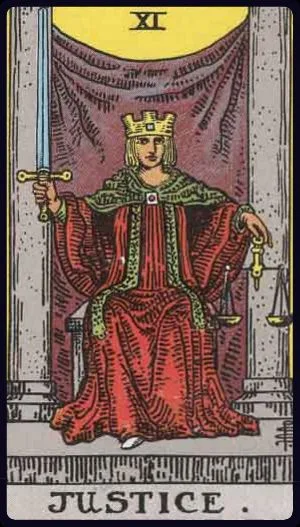
In the Rider–Waite–Smith deck, a woman in a red cloak sits on a stone throne between two pillars, with a purple veil hanging behind her. She looks straight at you, stern and steady. In her right hand she raises a double-edged sword—clarity of thought, and a decision that cuts both ways—and in her left she holds scales, the symbol of weighing. On her head is a square crown set with a jewel: order built on law.
The toe of a white slipper peeks out from under her cloak, a quiet hint that there is humanity behind the severity. The purple veil behind her covers what can’t be seen at once: justice looks beyond the obvious. The pillars recall the balance of two sides, and the yellow background the clear light of reason. In the Rider–Waite–Smith deck the card is numbered XI, with Strength as VIII; this order comes from the Golden Dawn tradition.
Justice in love and relationships
In relationships, Justice points to honest conversation and equality. A couple in which nobody hogs the blanket, and where duties and attention are shared evenly, is her territory. Sometimes the card appears when you finally decide to say out loud what you’ve kept quiet about for a long time, and you both get the chance to really listen.
If you’re single, the card advises against idealizing: look at what you actually want and what you’re ready to give. A connection that begins on honest terms has a chance of lasting. Occasionally the card also points to the legal side of a relationship—a prenuptial agreement, dividing property, custody questions.
Reversed, Justice is lopsidedness: one person gives more, the other takes, and nobody says it aloud. Or you judge your partner by double standards—forgiving yourself, but not them. The opposite happens too: for years you excuse someone’s behavior and call it “understanding.” The card suggests bringing an honest tally back into the relationship—not to make accusations, but to see how to go forward.
What your partner feels
The person you’re asking about treats you thoughtfully and, most likely, without big emotional swings. They weigh what’s happening between you and try to be honest, even when it’s uncomfortable. That stance usually means respect, though not always passionate infatuation.
If your question is about an ex coming back: Justice sets a condition—a return is possible only after an honest look at why the relationship ended. Without it, everything will go around the same loop again. Reversed, the card shows a person who avoids responsibility or is tangled up in their own motives.
Career and money
A good card for contracts, interviews, performance reviews, and tax or legal matters: you’re likely to be judged on your merits. The matter is settled on facts, so prepare your documents and numbers. With money, it points to fair pay, a debt repaid, and reasonable deal terms. Still, read the paperwork carefully before signing.
Unfairness is possible: underpayment, disputed terms, nitpicking without grounds. But the card also asks you a question: are you fitting the facts to the conclusion you want? Don’t rush to sign, check the fine print, and for serious matters consult a lawyer or specialist—tarot is not an advisor here.
Health and well-being
On the subject of well-being, Justice speaks of balance: between work and rest, effort and recovery, what you give to others and what you keep for yourself. If one side of the scales has been outweighing the other for a long time, sooner or later your body will remind you with fatigue and irritability.
Upright, it’s a good moment to put your routine, sleep, and eating in order; reversed, it signals that you’ve long been putting off looking after yourself. If something is bothering you, see a doctor: cards are no substitute for a medical consultation.
Tarot is a tool for reflection, not a diagnosis or medical, financial, or legal advice. If you have health concerns, please see a doctor.
Yes or no?
An example of a Cause · Situation · Outcome spread: Justice shows that the current turn is a result of earlier decisions, The Devil reveals a dependency that gets in the way, and Temperance suggests a way out—gradual and free of extremes.


Justice as advice and card of the day
Gather the facts and separate them from feelings. Take a sheet of paper and draw two columns: what actually happened, and what I think about it. More often than not, the decision becomes obvious at this very step.
If a hard conversation is ahead, speak simply and without blame, with specifics: “On Thursday you canceled our meeting, and it hurt.” And be ready to hear the other side as attentively as you want to be heard yourself.
Justice as your card of the day
A day when something falls into place. You may get an answer to a long-standing question, documents may arrive, or you may receive the recognition you’ve earned. Don’t overpromise, and don’t take on someone else’s share of the work: the card asks you to keep your balance. In the evening, it’s worth asking yourself whether everything you said and did today was fair.
Combinations with other cards
-
 Law and order: decisions are made by the rules, and authority is backed by responsibility.
 -
 A final verdict: circumstances settle everything for good, and there is no going back.
 -
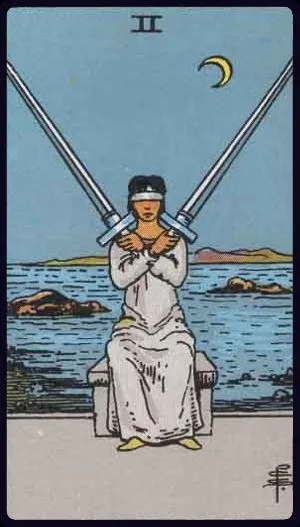 You face a choice and don’t want to admit the obvious facts—time to weigh them.
 -
 Relationships secured legally and materially: inheritance, family wealth, agreements.
 -
 An honest choice in a relationship: heart and mind finally agree.
 -
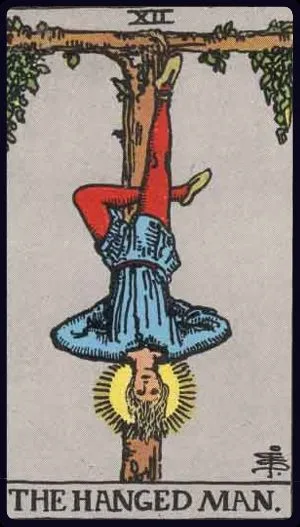 A decision is delayed: the case is “on pause,” and you need to look at it from another angle.
Justice reversed
Reversed, the scales have tipped. This can be outside unfairness—you’ve been undervalued or put on unequal terms—or an inner kind: you’re avoiding the truth, making excuses, hiding from the consequences of your own steps. Sometimes there’s a long, drawn-out process behind it, where a decision simply doesn’t come.
The card doesn’t hand down a verdict; it shows where exactly the balance has been broken. Ask yourself: what don’t I want to admit? Where am I too harsh on myself or on others? Once the point of imbalance has a name, restoring balance becomes realistic.
Questions about this card
Is Justice a good tarot card?
It’s neutral. It’s good if you’ve acted honestly and are ready for the truth, and uncomfortable if you were hoping to sidestep the consequences. Its main quality is clarity, not a verdict.
What does Justice mean in love and relationships?
Equality, honest conversation, and a considered decision. It shows who is putting how much into the relationship and suggests evening out the balance so the bond can be steady.
What does Justice mean for a man’s feelings?
He takes you seriously and thinks things through, weighing the situation soberly. It’s more respect and a wish to be honest than passion; reversed, it points to indecision or avoiding a straight answer.
Is Justice a yes or no card?
It depends on the question. If the answer is decided by facts and rules, the card supports a well-earned “yes.” Reversed, it says: not yet, first find out the circumstances.
What does Justice reversed mean in a career reading?
Possible disputes, delays with paperwork, and a sense that you’re being judged unfairly. Check the contract and the facts, and don’t sign anything in a hurry.