General meaning
The Devil is the card of whatever holds us. It isn’t an outside evil but our own attachments, habits, and fears: dependence on a person, a job, money, approval, sweets, the phone screen. The card asks an uncomfortable but useful question: are you doing this because you want to, or because you can’t do otherwise?
Oddly enough, the Devil isn’t about punishment; it’s about awareness. As long as an attachment goes unnamed, it steers you from the dark. When the card appears, it names it. That in itself is freeing: a chain you can see is easier to take off than one you don’t know is there.
In another key, the Devil is about attraction: passion, magnetism, material desires. In that sense it isn’t only a dark card. Desire, ambition, and a taste for life are part of its energy too. What matters is that they stay yours rather than turning into shackles.
What’s pictured on The Devil
In the Rider–Waite–Smith deck, a winged creature with goat horns, hooves, and owl-like talons, usually called Baphomet, sits on a black pedestal. An inverted pentagram is on its forehead, and its right hand is raised in a gesture resembling the Hierophant’s blessing, while its left holds a burning torch. The background is entirely black, without a glimmer of light.
At its feet stand a naked man and woman, the same pair we see on The Lovers. They wear horns and tails: the man a flaming tail, the woman a tail of grapes. Both have chains around their necks, but look closely: the chains hang loosely and can easily be slipped off. That is the card’s central secret: the chains aren’t locked. The two stay beside the monster not because they can’t leave, but because they won’t look toward the door.
The Devil in love and relationships
In love, the Devil speaks of a strong but unhealthy pull. It can be a passion with a lot of jealousy and control; a dependence on approval; a relationship that’s hard to leave even though it has long been hurting you. It can also stand for purely physical attraction without deeper closeness.
Not every Devil is toxicity. If a couple is aware of their passion and can talk about it honestly, it can be an intense, vivid partnership. The key question: are you together because it feels good, or because you’re afraid to part?
Reversed, the Devil is the beginning of freedom. You see what keeps you in the relationship and you’re ready to change something: to end an unhealthy bond, set boundaries, stop excusing someone’s behavior. It may be hard and painful, but it’s a road back to yourself. In some cases the card also says that the dependency still pulls you back, and it’s worth leaning on loved ones or a professional.
What your partner feels
The person you’re asking about feels a strong pull toward you, but it may be more than love: attraction, a wish to possess, or fear of loss. The feelings are intense and not always calm; they carry a lot of passion and tension, and sometimes jealousy.
If your question is about an ex coming back: the card shows that the attraction between you remains, but the question is whether it’s healthy. Slipping back into the same “captivity” is easier than building something new. Reversed, the connection is weakening, and the person is freeing themselves from your influence, or you from theirs.
Career and money
A job that takes more than it gives: the “golden handcuffs” of a high salary, a manipulative boss, a culture of overwork. The card also points to a strong pull toward money, status, success at any cost. Ask yourself: who benefits from your agreeing to these conditions? With money, it can mean impulsive spending, and loans and debts taken on “under pressure.”
You’re beginning to see what holds you: fear of losing income, other people’s expectations, familiar comfort. It’s a good moment to revisit a contract, negotiate boundaries, or look for another place. Calmly make an exit plan: not an abrupt one, but one in stages.
Health and well-being
On the subject of well-being, the Devil is a reminder of habits we don’t control well: overindulging in food, sweets, alcohol, social media, working without days off. This isn’t about blame or a diagnosis, but about paying attention to what drains your energy.
Upright, the card is a reason to look honestly at your habits and perhaps ask for support; reversed, it’s a step toward freeing yourself from them. If it’s hard to cope on your own, reach out to a professional—that is strength, not weakness. This is not medical advice; if you’re concerned, see a doctor.
Tarot is a tool for reflection, not a diagnosis or medical, financial, or legal advice. If you have health concerns, please see a doctor.
Yes or no?
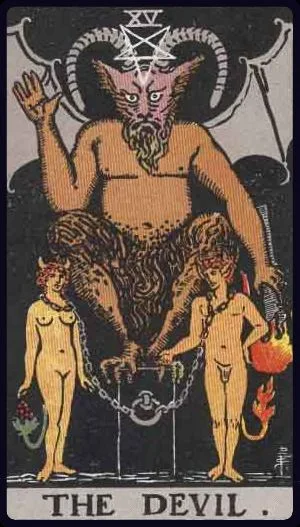
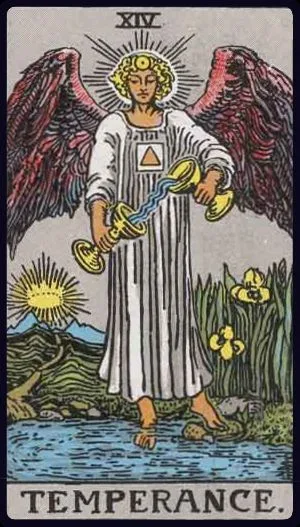
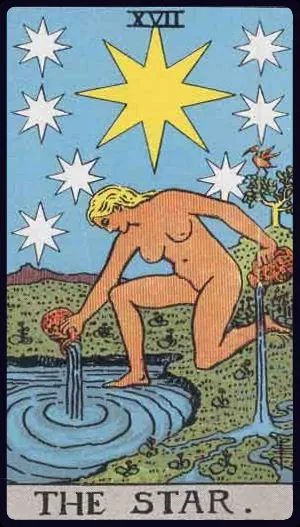
An example of a What holds you · What shows the way out · Where it leads spread: The Devil names the attachment, Temperance suggests a gentle way out without sudden jerks, and The Star shows recovery and hope once the chains are off.
The Devil as advice and card of the day
Name what holds you as concretely as you can. Not “a toxic relationship,” but “I stay because I’m afraid of being alone on weekends.” A phrasing like that shows where to look for the way out.
Then find one small action that gives you back a choice: a week without checking their page, one “no” to an extra shift, one conversation with someone close. The chains in the picture are loose—tug them even a little and you’ll see they come off.
The Devil as your card of the day
Today you’ll most likely notice where you’re acting on autopilot: the urge to open your phone, eat too much, spend on impulse, snap at someone. Just notice it. Don’t scold yourself, but don’t give in either: take a breath and ask what you actually want. One conscious “no” in a day is already a win.
Combinations with other cards
-
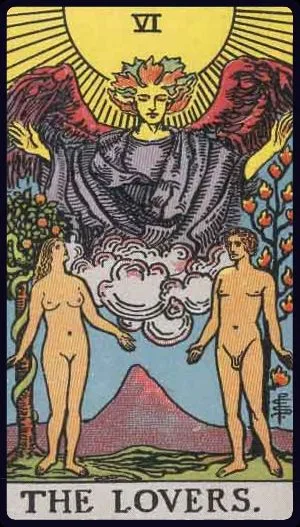 A choice between passion and conscious love; an attraction worth checking for health.
 - The way out of dependency through the gradual return of balance.
-
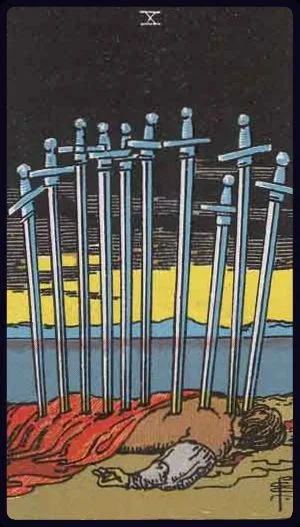 A destructive bond has reached its limit; time to break free and start over.
 -
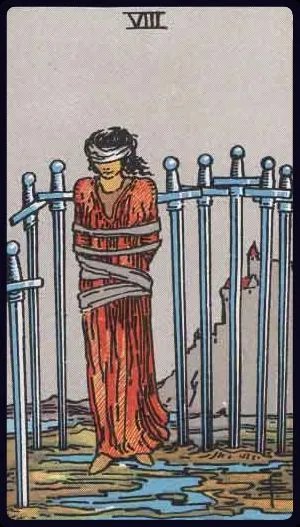 You’re bound by limits that can actually be removed.
 -
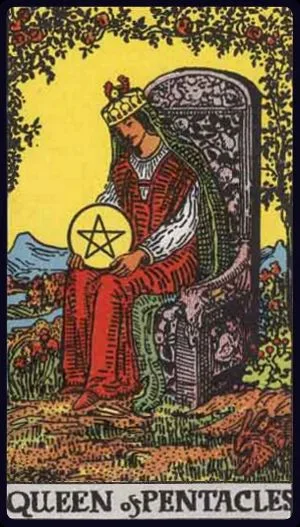 Comfort and material stability become the main anchor: is the price too high?
 -
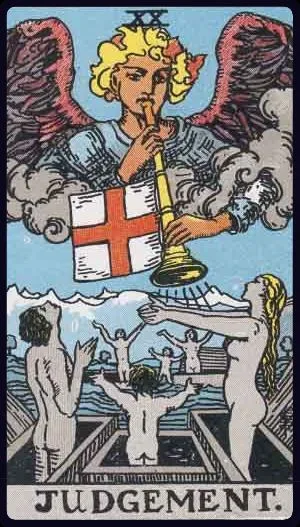 Awakening and a decision to change your life: you hear the call to freedom.
The Devil reversed
The Devil reversed is one of the most encouraging reversed cards. The chains have loosened: you see the dependency and want out. But freedom is rarely quick. There may be setbacks, longing for the past, a wish to go back “just for a minute.” That’s normal.
There’s a second side: if you’re trying to fight alone, the card shows that the strength within you is still blocked. A conversation with someone close or with a professional, a new routine, giving up what tempts you—these are what help turn an insight into real change.
Questions about this card
Is the Devil a bad tarot card?
The image is frightening, but the meaning isn’t evil. It’s the card of dependency and self-deception, and its appearance helps you see what holds you. Awareness is the first step toward freedom.
What does the Devil mean in love and relationships?
Strong attraction, passion, dependency, jealousy, and control. The card asks: are you staying out of love or out of fear? In a couple who are aware of it, it can mean vivid passion.
What does the Devil say about a man’s feelings?
Strong attraction, a wish to possess, and sometimes fear of loss. The feelings are intense but not necessarily calm or deep. Reversed, he’s freeing himself from your influence.
Is the Devil a yes or no card?
More likely “no” or “be careful”: you may want something that doesn’t serve you. Reversed, it can mean “yes” if the question is about breaking free.
What does the Devil reversed mean in relationships and career?
The beginning of freedom from a dependency or a toxic bond. You see the trap and are ready to change the terms—the hardest stage, seeing it, is already behind you.