General meaning
Temperance is the card of tuning. Think of tuning an instrument: tighten one string a little, ease another. It isn’t about a compromise made just to avoid an argument, but about the skill of combining what seems incompatible—work and rest, reason and feeling, your own wishes and those of the people close to you. The result of that blend is softer and richer than either part alone.
The card appears when you’ve either just come through extremes—a conflict, overload, emotional swings—or you’re on the verge of falling into them. Then Temperance says: slow down, find your own rhythm, and don’t choose between “everything” and “nothing.” Good results come gradually.
There’s another side too: patience. Temperance doesn’t promise quick miracles, but it does promise steady movement. If you’re being pushed to hurry while your intuition says a couple more ingredients still need “mixing,” the card is on the side of intuition. Just don’t confuse moderation with listlessness: this is conscious restraint, not passivity.
What’s pictured on Temperance
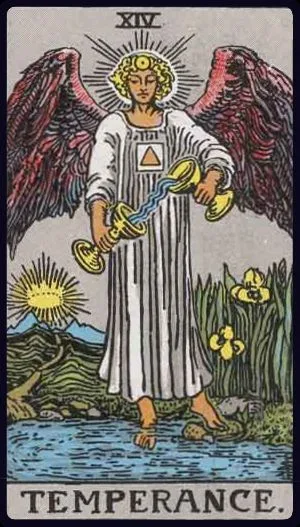
In the Rider–Waite–Smith deck, a winged figure—an angel usually identified as Archangel Michael—stands with one foot in the water and the other on land. In his hands are two cups, and water flows from one to the other in a thin arc without spilling. This pouring is an image of the constant exchange between the conscious and the unconscious, between reason and feeling.
On the angel’s chest is a golden square with a triangle inside: a symbol of matter and spirit joined. A golden glow shines above the head, and a sun symbol marks the forehead. The sunlit wings spread wide. In the background, a winding path leads to mountains, above which a crown rises. Irises grow along the water—flowers of the rainbow, tied to the goddess Iris, who links sky and earth. The road from the valley to the shining peak is unhurried but sure.
Temperance in love and relationships
In love, Temperance speaks of a harmony without struggle. A couple learns to hear each other and adjust without losing themselves. It might be a calm reconciliation after a fight, a gentle smoothing of everyday conflicts, or the search for a shared rhythm—say, when one partner is a night owl and the other an early bird, and both are learning to live together.
If you’re single, the card advises against hunting for the “ideal” or checking everyone against a list of requirements; instead, look more closely at the people you feel calm and curious around. Relationships that start slowly tend to prove more lasting.
Reversed, Temperance is a seesaw: passion one day, coldness the next, “all or nothing.” One person rushes while the other brakes; one lives at work while the other waits for attention. The card shows that the balance has slipped and asks you to begin small: agree on concrete things—time together, sharing of chores, boundaries around personal space.
What your partner feels
The person you’re asking about feels calm and kindly toward you. They don’t want abrupt moves, value a peaceful relationship, and are most likely ready to grow closer gradually. It’s a mature feeling that is tested by time, not a flash of infatuation.
If you’re asking about an ex coming back: Temperance leaves the door ajar but requires patience. Reconciliation is possible if both sides learn to negotiate and don’t rush. Reversed, there are too many emotions and reproaches, and the situation hasn’t cooled down yet.
Career and money
A steady, even stretch. A good time for teamwork, negotiations, and finding compromises, as well as for projects that require combining different skills. The card rewards people who don’t rush but move steadily toward their goal. With money, it means sensible saving, a spending plan, and gradual accumulation; big risky moves are not this card’s style.
Overload, crunch time, an unbalanced schedule: you’re either not resting or neglecting important tasks. Disagreements in the team are possible, with everyone hogging the blanket. With money, it can mean impulsive spending or, the opposite, excessive frugality. Start by making a weekly plan with room for the unexpected.
Health and well-being
For well-being, Temperance is one of the most supportive cards. It speaks of recovery through routine: regular sleep, calm eating, moderate activity, time in nature. There’s no need to chase records—gradual change is what counts.
Reversed, the card shows swings: one day you wear yourself out with work, the next you “make up for it” with sleep and sweets. A steady rhythm will do more good than any radical measure. This is not medical advice; if symptoms persist, see a doctor.
Tarot is a tool for reflection, not a diagnosis or medical, financial, or legal advice. If you have health concerns, please see a doctor.
Yes or no?
An example of a What is happening · What is missing · What is needed spread: The Tower shows a sudden collapse, Death shows the need to let go of the old, and Temperance suggests how to recover: gently, without hurrying.
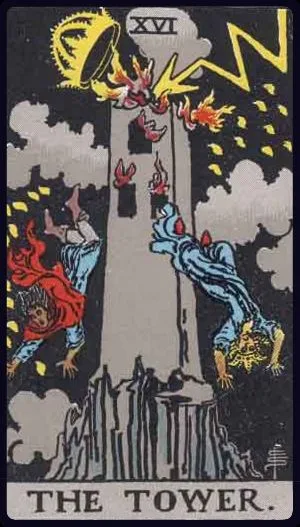
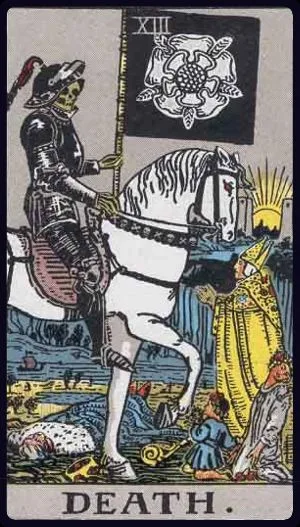
Temperance as advice and card of the day
Find your “middle path” in something specific. If you work too much, set aside one evening just for yourself. If you give in too often, say out loud at least one thing you want. Small adjustments are stronger than grand decisions.
Don’t try to speed up the process. As when making a sauce, the point is to add ingredients gradually, taste, and adjust. Ask advice from someone who knows how to listen rather than push.
Temperance as your card of the day
A day for an even, calm pace. A good time to settle disputes gently, to reach agreements, and to finish what has been dragging on. If a rush of hurry or irritation comes over you, pause, drink some water, and recall the image of the flowing stream. Don’t take on more today than you can carry; in the evening, be glad that the day turned out steady.
Combinations with other cards
-
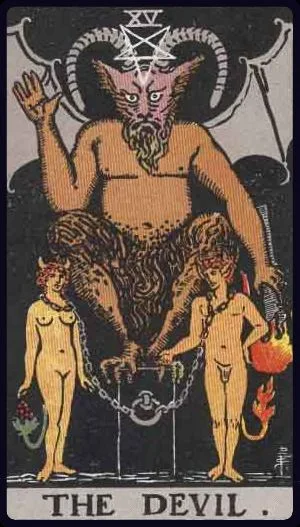 Dependency and moderation in one spread: the way to freedom runs through gradual limits.
 -
 + The StarHealing and hope: a gentle recovery after a hard period.
 -
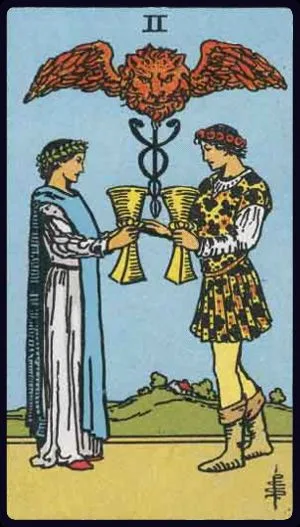 A harmonious union of two people, where each keeps their own self and respects the other.
 -
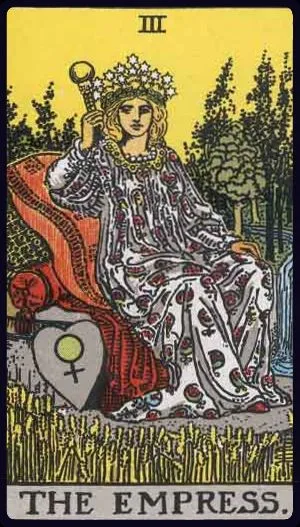 Care and growth: a calm period when everything ripens smoothly.
 -
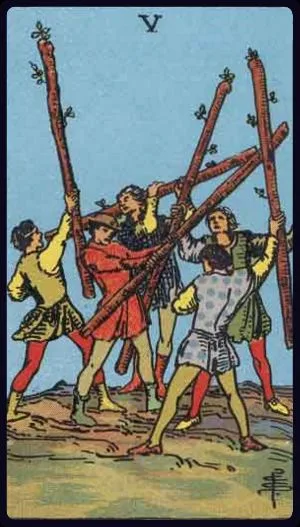 Conflict and struggle soften, and common ground is found.
 -
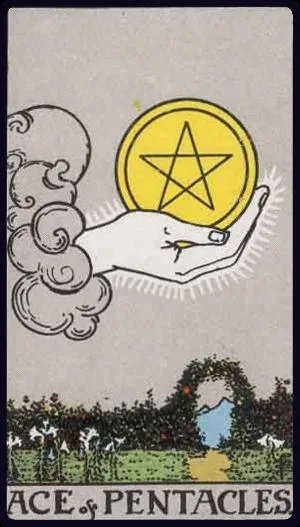 Careful investment of effort and money in something that will give you a steady foundation.
Temperance reversed
Reversed, it’s as if the pouring has stopped: one cup is overfull, the other empty. You’re either giving too much, demanding too much, or trying to speed up something that ripens slowly. Hence the irritation, the fatigue, and the feeling that “nothing adds up.”
The energy isn’t lost; it’s just moving in jerks. Start with the most obvious extreme: where are you “all or nothing”? Try shifting it by a quarter—not by half. That is usually enough to bring back the sense of control.
Questions about this card
Is Temperance a good tarot card?
Yes, it’s a gentle, supportive card. It suggests finding balance and moving patiently. It doesn’t promise quick miracles, but it gives a reliable foundation for growth.
What does Temperance mean in love and relationships?
Harmony, the ability to negotiate, and gradually growing closer. A couple learns to adapt to each other without pressure. For a conflict-ridden relationship, it’s a signal to lower the tone and look for the middle ground.
What does Temperance say about a man’s feelings?
He feels calm and peaceable and isn’t rushing things. It’s an even, mature attitude. Reversed, the card points to emotional ups and downs and uncertainty.
Is Temperance a yes or no card?
More likely “yes,” provided there is patience and gradual progress. The answer won’t come at once, but the situation is moving in the right direction. Reversed, restore the balance first.
What does Temperance reversed mean in career and money readings?
An imbalance: overwork, too little rest, impulsive spending, or disagreements in the team. Revisit your schedule and budget, and build in some room for the unexpected.