General meaning
The Tower is the card of sudden truth. It comes when the structure everything rested on turns out to be shaky: a plan, a relationship, a belief, a status, a familiar way of life. The jolt can come from outside—a layoff, an argument, unexpected news—but what falls is usually something that had been wobbling for a long time. The Tower simply exposes it.
This is the most unsettling card of the Major Arcana, and it’s more honest to say so up front: the change can be painful, and it doesn’t ask your permission. But the card isn’t about punishment. It’s about the fact that there’s no point in building further on a false foundation. Clearing the ground frees up space and often brings a surprising relief—not right away, but reliably.
Most often the Tower is remembered in words like “it was as if a veil dropped”: you suddenly see what you hadn’t noticed before. So the wisest response is not to panic but to ask: what was actually wrong here, and what can I keep? The card leaves you the choice of what to do with the rubble.
What’s pictured on The Tower
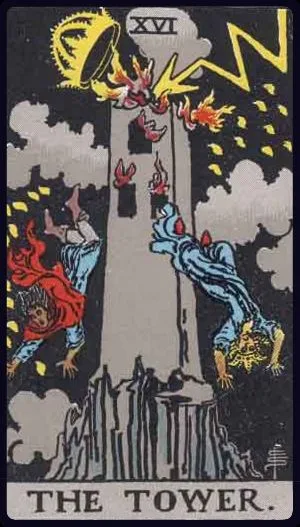
In the Rider–Waite–Smith deck, a tall dark tower stands on a mountaintop. Lightning from a black sky strikes it, knocking the crown from its top, and flames burst from its windows. Two people fall: a man in red, and a woman in blue and yellow. Yellow sparks in the shape of the Hebrew letter yod fill the air—22 fiery marks, which in the Hebrew alphabet tradition are a symbol of divine power.
The crown is a symbol of pride and a claim to permanence; it is knocked off by exactly the thing that refused to be flexible. The tower is built of brick, carefully, but with nothing to support it—its whole height rests on self-assurance. The rock beneath it is narrow and black. The fire in the windows is not only destruction but purification. In some interpretations, the falling figures are Adam and Eve, driven out of the “safe paradise” of ignorance. Importantly, the falling figures bear no wounds: they’ve been torn from the familiar, but not killed.
The Tower in love and relationships
In love, the Tower is a sudden discovery: infidelity, an argument that exposes accumulated problems, an unexpected breakup, a lie brought to light. Couples with a long-standing “elephant in the room” may go through a loud scene after which nobody can pretend everything is fine anymore.
The outcome isn’t always a breakup. Sometimes, after such a shake-up, a couple speaks openly for the first time, drops their roles, and gets a chance to start over. For those who are single, the Tower is a reminder to let go of idealized expectations and stop building relationships on a dream of a person.
Reversed, the Tower is a crisis that drags on: you both feel something is going to collapse but don’t dare say it aloud. Or you avoid the inevitable conversation and pretend everything is as before. Sometimes the card says the worst has passed and the cracks can be patched up little by little—but only with honesty.
What your partner feels
The person you’re asking about is under strong tension or going through an inner break. Their feelings have changed abruptly—either they’ve suddenly realized something about themselves or the relationship, or they’re in shock. A calm, even attitude isn’t something to expect right now.
On an ex coming back, the Tower speaks cautiously: the old structure is gone, and there’s no returning to it. If contact resumes, it will be on new terms. Reversed, hurt feelings and unresolved conflicts keep pulling things back.
Career and money
A sudden reorganization, layoffs, a conflict with management, a failed project, a contractor going bankrupt, an unexpected refusal. Everything that seemed solid suddenly proves shaky. The good news is that you now see the real picture. With money, it can mean unforeseen expenses and losses; it’s wise to keep a financial cushion and not depend on a single source of income.
You sense that something has been wobbling for a while, but you’re not ready to change. Or the blow has already landed and you’re avoiding taking stock. The card advises not waiting for it to collapse on its own but rethinking your plans yourself. In finances, check documents, debts, and obligations while you can still do so calmly.
Health and well-being
On the subject of well-being, the Tower is linked to abrupt change and stress. Sudden nervous tension, sleepless nights after bad news, a disrupted routine—the body reacts to shock. It’s important to give yourself time to recover: eat, sleep, and be around people.
Reversed, the card points to accumulated tension you aren’t letting yourself work through. Find a safe outlet: a walk, a conversation, physical activity. This is not medical advice; if your state worries you, see a doctor or a therapist.
Tarot is a tool for reflection, not a diagnosis or medical, financial, or legal advice. If you have health concerns, please see a doctor.
Yes or no?
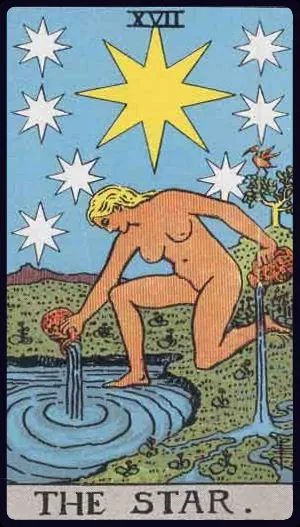
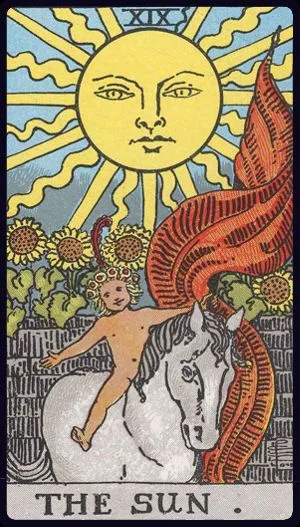
An example of a What is collapsing · What opens up · What comes after spread: The Tower shows the shattering of illusions, The Star shows what opens up when the dust settles, and The Sun shows the joy and clarity after a hard period.
The Tower as advice and card of the day
When something collapses, safety comes first: personal, financial, emotional. Sort out the essentials: where to live, what to live on, who to talk to. Leave decisions about the future for later, once the shock passes.
Then, days or weeks on, ask: what about this was predictable? Which signals did I overlook? Often the Tower brings down what we stubbornly didn’t want to see. Drawing a lesson from it means turning the rubble into a foundation.
The Tower as your card of the day
Surprises are possible today: plans falling through, unwelcome news, someone’s sharpness. Don’t set rigid schedules, and leave some slack in your time. If something goes wrong, remember that the card warns not of trouble but of a moment of truth arriving. Keep a backup plan at hand and look after your nerves.
Combinations with other cards
-
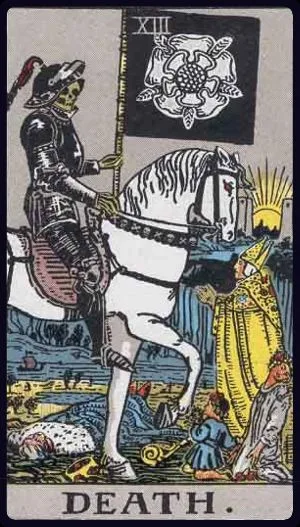 + DeathAn abrupt end to an old chapter: painful, but it makes room for something new.
 - + The StarAfter the crisis come healing and hope: the main thing is that the worst is behind you.
-
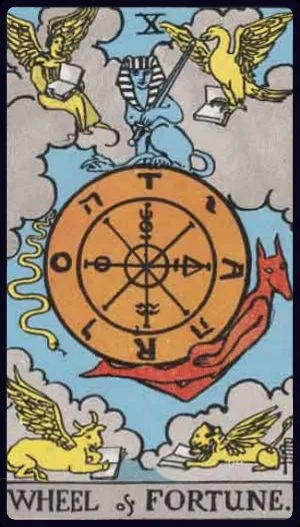 Things turn sharply: an event that changes the whole shape of the situation.
 -
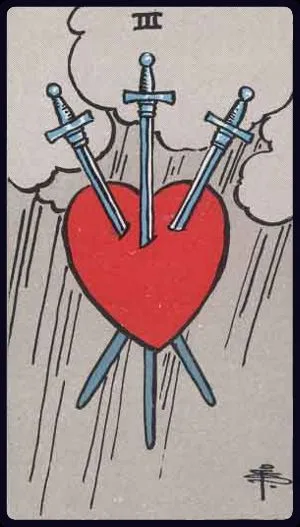 Deep emotional pain from a breakup or betrayal—feel it rather than suppress it.
 -
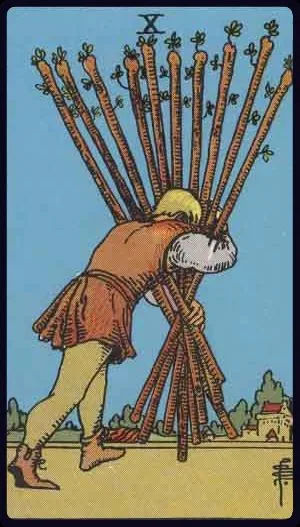 An overload that shatters your usual life; time to set down the excess burden.
 -
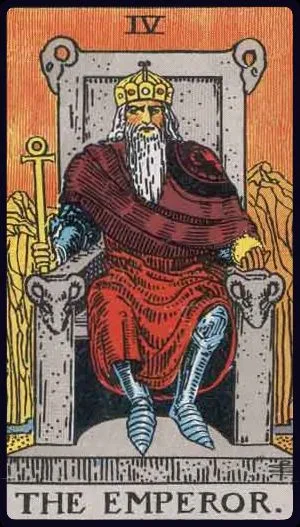 Authority, order, or a structure held together by rigid control is coming apart.
The Tower reversed
Reversed, the Tower is either avoided or drawn out. You feel things can’t go on like this, yet you keep living the old way, propping up the wobbling walls. Sometimes the card shows that the blow was avoided but a residue remains: the cracks haven’t gone anywhere.
There’s another meaning too: the catastrophe may have been less destructive than it seemed, and you’re already getting back on your feet. Both scenarios call for the same thing: not cosmetic fixes, but a look at the foundation. What really needs rebuilding while you can still do it on your own terms?
Questions about this card
Is the Tower the worst tarot card?
It’s the most unsettling, but not the “worst.” The Tower brings down what was already unstable and gives you a chance to build anew. Many people remember a sense of relief after it appears.
What does the Tower mean in love and relationships?
A sudden exposure of the truth: an argument, a revelation, a crisis. The couple either parts or speaks honestly for the first time. A relationship built on illusions is unlikely to stay the same.
What does the Tower say about a man’s feelings?
He is under inner tension or in shock and may act unpredictably. His former feelings have been reconsidered. Reversed, he is avoiding a talk about the relationship.
Is the Tower a yes or no card?
More often “no”: what you’re asking about is unlikely to stay as it was. If you want to free yourself from something that isn’t working, the card can support that.
What does the Tower reversed mean?
A crisis is building or dragging on because you’re avoiding change. The card advises not waiting for a blow but rethinking what is wobbling yourself.