General meaning
The Ten of Swords looks frightening, but its real meaning is calmer: it is an ending. The moment when a situation has reached its limit and there’s nowhere lower to go. A relationship that had been falling apart for a long time, a job that drained your energy, a strategy that wasn’t working. The card says this script has run its course, and there’s no point clinging to it any longer.
It matters that this isn’t about death or catastrophe. The Ten doesn’t predict misfortune; it states that a painful cycle has ended, and it stresses that after ten swords there won’t be another blow. People often feel a paradoxical relief: at last there’s no need to drag it out and pretend.
The card’s second theme is dramatization. Sometimes we feel “finished off” by an event that, seen soberly, isn’t so final. The Ten can show that you’re exaggerating the scale of a loss or have been playing the victim for too long. Then it’s time to get up and move on.
What’s pictured on Ten of Swords
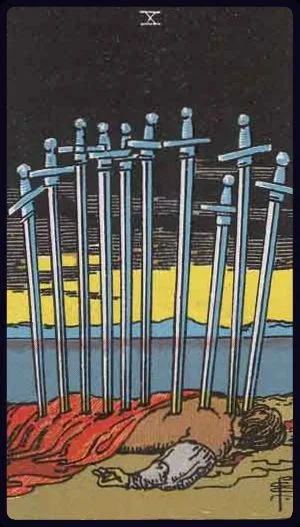
The card shows a person lying face down on the ground. Ten swords stick out of the back, a red cloak is draped over one leg, and the right hand is raised in a gesture of blessing, the fingers forming a sign. The scene is dramatic, but the face is hidden, which makes it more a symbol than a scene.
The sky is black, but a golden dawn rises on the horizon, lighting calm water and distant hills. The night has reached its limit and is beginning to leave. Dark sky above, light below—the whole meaning of the card lies in this contrast. You can’t fall lower than the floor, so the only direction is up, and the first rays are already visible.
Ten of Swords in love and relationships
In relationships, the card means the final closing of a painful story: a breakup, the acceptance that the past can’t be brought back, or the end of a long-running conflict. It’s a very heavy feeling, but it gives you a chance to end the waiting and begin again.
If you’ve recently broken up, the Ten of Swords says the sharpest period is behind you. Give yourself time to recover: friends, taking care of yourself, calm activities. Don’t go back into a relationship just because of the pain of loneliness.
You’ve already started to get up, but the past tugs at you: memories return, you want to write to your ex, to go over it all once more. Sometimes the card points to a drawn-out “dying” of a relationship, when everything is already clear but nobody puts in the full stop.
What your partner feels
If the card describes a partner, they’re most likely at the limit: tired, disappointed, feeling that everything has run out. Such a person has little energy left for new attempts and may decide to end the relationship.
That isn’t always final: sometimes the end of an old form makes room for another, more honest one. But that takes a pause and a willingness on both sides to look at what didn’t work. Don’t ask the person for a decision at the moment of greatest exhaustion.
Career and money
The end of a project, a layoff, a business closing, or the end of a long burnout. Work in its old form has run its course. Painful as it is, the space that opens up can be filled with something else. It helps to take stock: what you learned, what has been preserved. With money, an unstable period ends, but it’s not yet the time to take risks. Rebuild your foundation first.
You’re already looking for a new path, but the past lets go slowly: resentment, a sense of failure, fear of starting. Don’t rush yourself. Small steps—updating your résumé, talking to former colleagues, taking a course—help restore your footing.
Health and well-being
The Ten of Swords speaks of exhaustion: a long period of stress wrings out your strength, and your body asks for a break. Sleep, food, calm walks and support from those close to you become a necessity, not a luxury.
This is not medical advice: if you’ve felt drained, anxious or low for a long time, don’t put off a talk with a doctor or a therapist. The card shows the end of a hard cycle, and it’s important that you have support along the way.
Tarot is a tool for reflection, not a diagnosis or medical, financial, or legal advice. If you have health concerns, please see a doctor.
Yes or no?
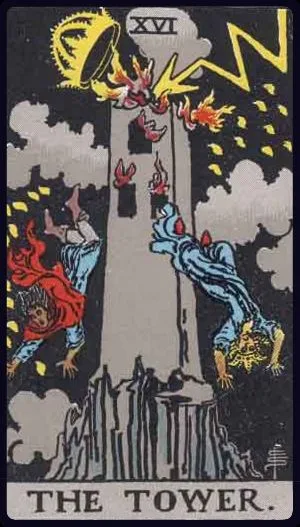
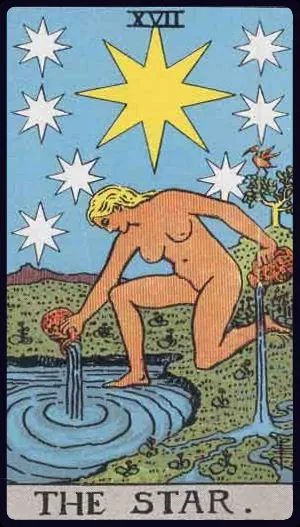
An example What ended · Outcome · What’s next spread: The Tower is the sudden collapse of the old, the Ten of Swords the full stop on this chapter, and The Star shows recovery and hope.
Ten of Swords as advice and card of the day
Acknowledge that the chapter has ended, and say it aloud: “this is behind me.” As long as you wait for everything to come back, you keep spending energy on something that’s no longer there. Then take one small step in a new direction: put away something tied to the past, sign up for a meetup, call a friend.
Don’t rush into grand plans. Rest and recovery first, decisions after. The dawn on the card isn’t bright but soft, and that’s the right pace.
Ten of Swords as your card of the day
The day may bring a sense of completion: a conversation, a project, a period comes to a close. Don’t be surprised if there’s sadness and relief at the same time. Don’t start anything new in the heat of the moment; it is, however, a good day to close out an old matter. In the evening, note what you’ve let go of, and go to bed early.
Combinations with other cards
- The sudden end of an old structure, followed by release.
-
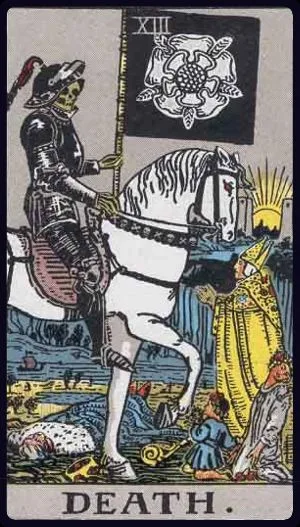 + DeathA complete change of chapter, with no return to the old.
 -
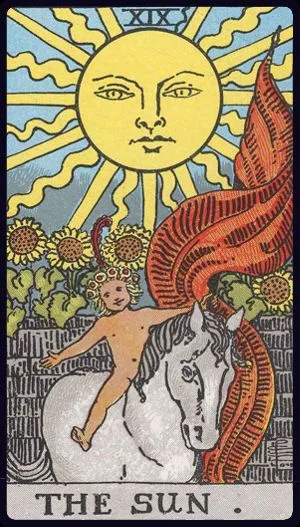 + The SunClarity and joy after a long dark stretch.
 -
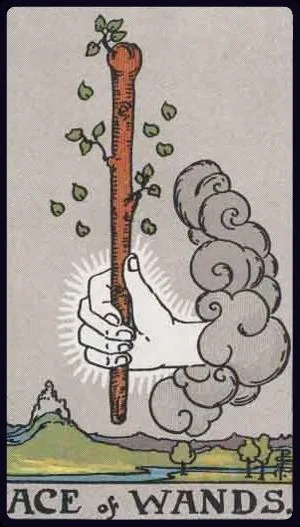 A fresh impulse and a new idea in place of the old ending.
 -
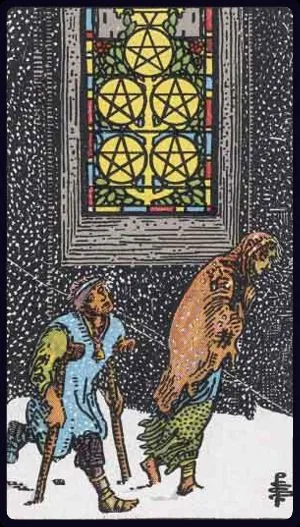 A hard period of hardship and loss, in which support is worth seeking.
 -
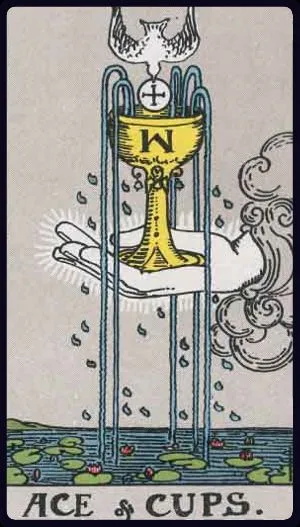 A new feeling and hope begin to grow after the pain.
Ten of Swords reversed
Reversed, the pain is still there but its sharpness is fading: you’re starting to get up, the swords are being “drawn out” one by one. It’s a slow, sometimes uneven process, with good days alternating with bad ones. This is what normal recovery looks like.
However, the card can also show getting stuck in the role of the wounded party: you cling to the past because it’s easier than moving on. Ask yourself what you get from this story and what you could get without it. If it’s hard on your own, the support of a therapist can speed things up.
Questions about this card
Is the Ten of Swords a bad card?
It’s a heavy one, but its meaning isn’t catastrophic: it marks the end of a painful cycle. After it there’s no new blow, and recovery lies ahead.
What does the Ten of Swords mean in a relationship?
The final closing of a hard chapter: a breakup, an acceptance that the past can’t be restored. It hurts, but it clears space for something new.
What does a man feel when the Ten of Swords comes up?
Tiredness and a sense that everything has run out. He has little energy for new attempts and may decide to end the relationship.
Is the Ten of Swords a yes or a no?
More of a “no” to continuing the old script, but a “yes” to a new beginning. Reversed, it shows you’re already in the process of recovery.
What should I do if the Ten of Swords comes up?
Acknowledge the ending, give yourself time to recover and avoid sudden decisions. Look after your sleep and the support of those close to you, and see a professional if you need to.