What are the Major Arcana?
A tarot deck has 78 cards, and 22 of them are called the Major Arcana (or trump cards). Each has a name, a Roman numeral (except The Fool, who has zero), and a scene: The Magician, The High Priestess, Wheel of Fortune, The Hanged Man, The Tower, The World. The other 56 cards are the Minor Arcana of the four suits. The deck’s overall structure and origins are covered in “What Is Tarot? A Beginner’s Guide”.
The key difference is scale. The Minor Arcana answer “what is happening in a particular area of life,” while the Major Arcana answer “what stands behind it”: which lesson, stage, choice, or force. If the Minor Arcana are the daily events, the Major Arcana are the theme those events unfold against.
The Fool’s journey: why the Major Arcana read like a story
Lay the 22 cards out in order and a plot emerges: a carefree traveler (The Fool) meets The Magician, the Priestess, the Empress and the Emperor, learns from the Hierophant, chooses with The Lovers, wins in The Chariot, and then passes through trials toward wholeness. This sequence is called the “Fool’s journey.”
An important caveat: the split into three stages of seven cards is a modern interpretive frame that helps memory; it is not ancient knowledge. Some authors divide the deck into three sevens, others differently. We use this version because it helps show the logic of the cards: each one has a reason to follow the one before it.
The 22 Major Arcana: meanings and shadows
For each card you’ll find a short meaning and a “shadow”: how the image looks when its energy shows up badly or distorted. It is not a “bad version” but the other side of the same image. Click a card’s name for a full breakdown covering love, career, and the reversed position.
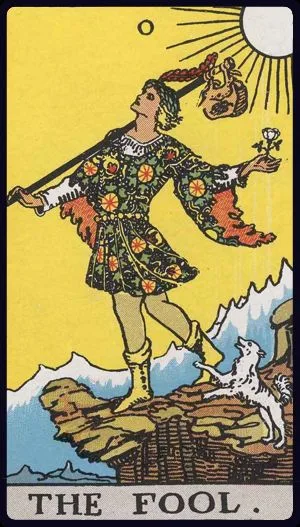
The Fool (0): the one who sets out
The Fool doesn’t belong to any of the sevens: he is the hero of the story, and the other 21 cards are what he meets along the way. His zero means “before experience”: a blank page where everything begins.
- 0 The Fool
A new beginning, trust in the unknown, lightness, and a willingness to take a risk without guarantees. The shadow is recklessness: stepping toward a cliff edge without looking down.
First seven (I–VII): becoming yourself, and will
From The Magician to The Chariot, the hero learns to act: he finds his will, senses intuition, receives care, order, and tradition, makes a first serious choice, and wins a first victory. This is “outer” growth, about who you become among other people.
-
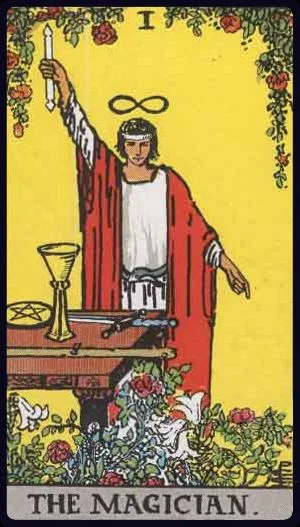
Will and skill: everything you need is already on the table, and all that remains is to start. The shadow is manipulation and polished promises with nothing behind them.
-
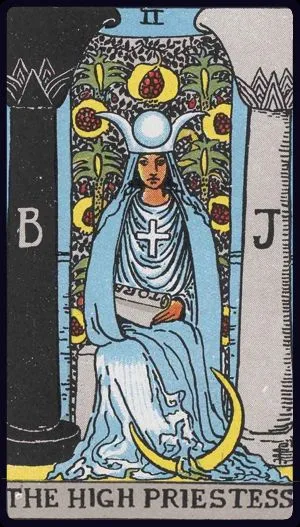
Intuition and hidden knowledge, a time to observe rather than act. The shadow is withdrawal and silence where a direct conversation is needed.
-
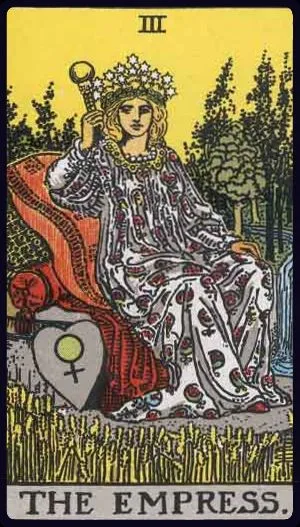 III The Empress
Nurturing, abundance, sensuality, and the growth of everything you have cultivated. The shadow is smothering and indulgence that take away another person’s independence.
-
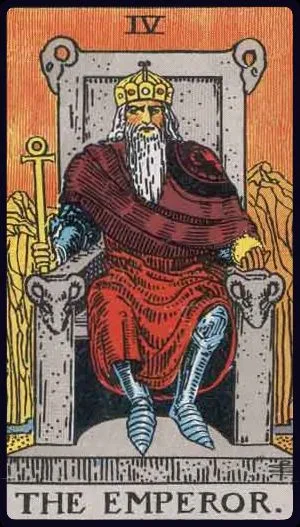 IV The Emperor
Structure, boundaries, and responsibility: authority built on order. The shadow is rigidity and control in the spirit of “only my rules.”
-
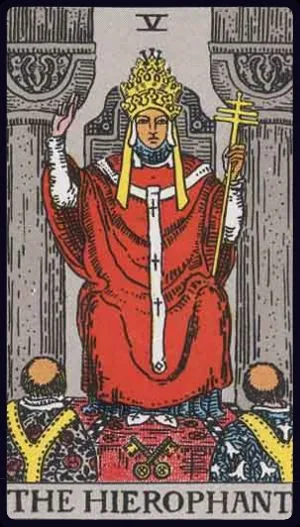
Tradition, a mentor, shared rules, and learning from those who have walked the path before you. The shadow is dogmatism: following the form instead of the meaning.
-
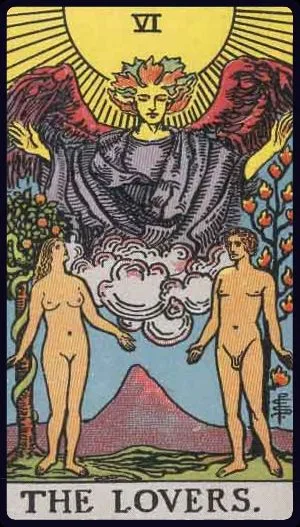 VI The Lovers
A choice made by your values and a union built on honesty; about romance, but also about any defining decision. The shadow is being unable to choose, or choosing under the spell of the moment.
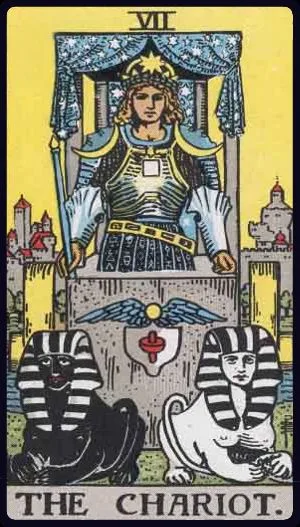
- VII The Chariot
Victory through discipline: you hold opposing forces together and move toward your goal. The shadow is drive without direction, a push “at any cost.”
Second seven (VIII–XIV): inner work and adaptation
The Chariot’s victory doesn’t settle everything, and the road turns inward. Strength, the Hermit, cycles, justice, an enforced pause, the end of a chapter, and the search for balance: here the hero learns to live with consequences and to change.
-
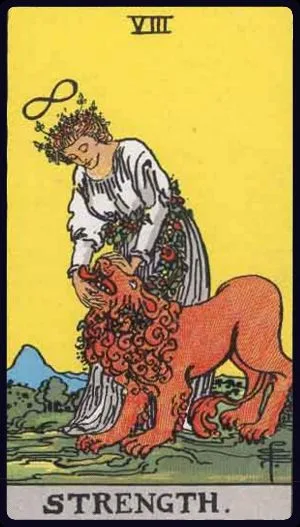 VIII Strength
Gentle fortitude: self-command that tames impulses with kindness rather than suppression. The shadow is self-doubt and outbursts when the “lion” takes over.
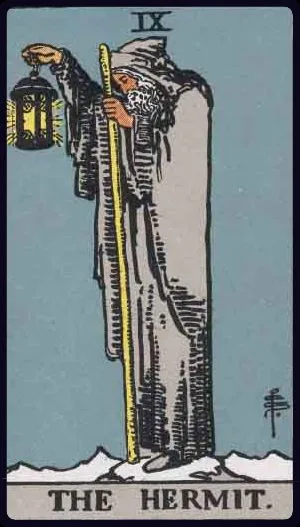
- IX The Hermit
Solitude, a search for meaning, and wisdom gathered through experience; a light you carry for yourself and others. The shadow is isolation, when pulling away from people is passed off as reflection.
-
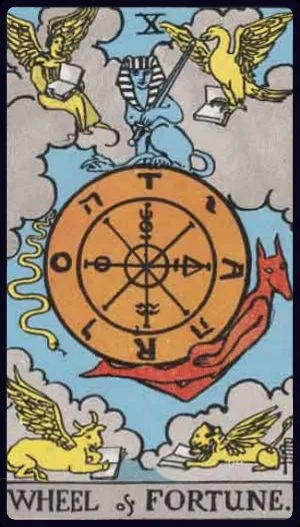
Cycles and change: ups and downs, and circumstances that are not up to you. The shadow is waiting passively for luck, or blaming “fate” for what action could change.
-
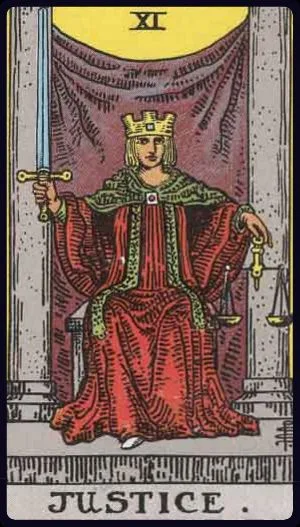 XI Justice
Cause and effect, honesty, and a weighed decision; accountability for the choice you made. The shadow is bias, self-justification, and too much harshness toward yourself or others.
-
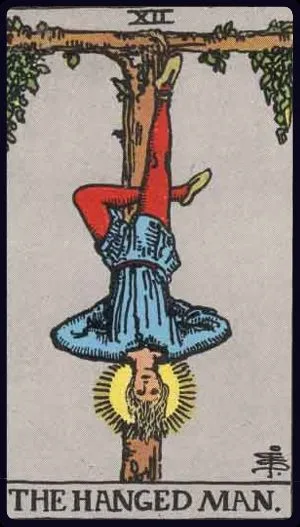 XII The Hanged Man
A pause and a change of perspective: you give up the familiar in order to see the situation differently. The shadow is getting stuck, “martyrdom,” and a wait that drags on without purpose.
-
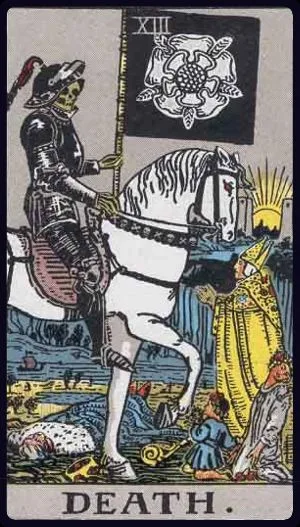 XIII Death
The end of a chapter and transformation: the old leaves and makes room for the new. The shadow is clinging to what ended long ago. A literal reading is an extremely rare exception.
-
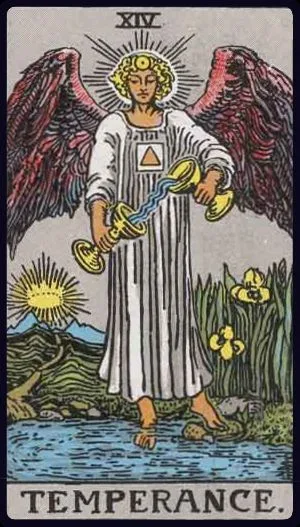 XIV Temperance
Balance, patience, and the skill of blending different elements in the right proportion. The shadow is extremes, haste, and imbalance, feast one day and famine the next.
Third seven (XV–XXI): crisis, release, wholeness
The final stretch begins at the darkest point: from attachments (The Devil) through collapse (The Tower) to hope (The Star), a meeting with fears (The Moon), joy (The Sun), awakening (Judgement), and completion (The World).
-
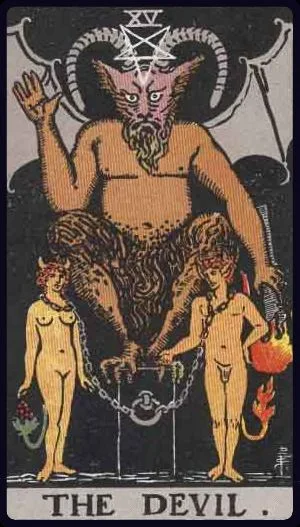 XV The Devil
Attachments, temptations, and dependencies; the card shows exactly what is holding you. The shadow is the feeling that “there is no way out,” though in the picture the chains hang loose and can be lifted off.
-
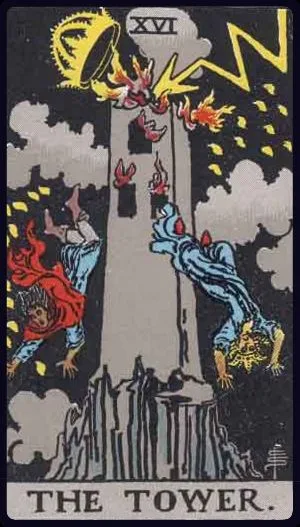 XVI The Tower
The sudden collapse of a shaky structure: a shock followed by insight. The shadow is panic and rebuilding everything on the same mistake.
-
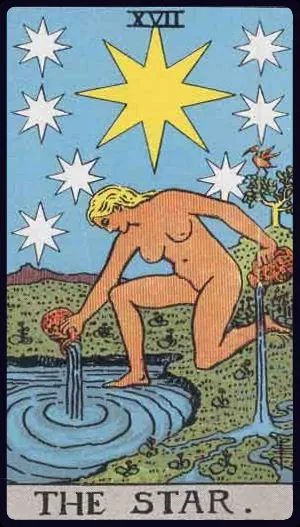 XVII The Star
Hope and recovery: calm faith after upheaval and a clear view of the future. The shadow is waiting for a miracle without acting, or losing hope.
-
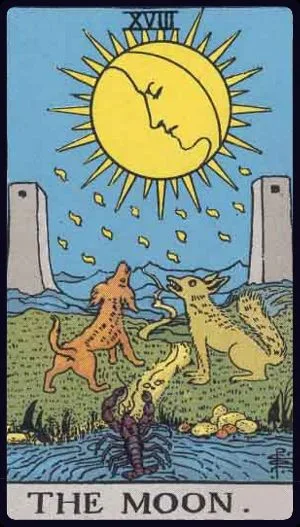 XVIII The Moon
Uncertainty, dreams, fears, and whatever is hidden in the fog; a time for caution. The shadow is self-deception: anxiety mistaken for fact.
-
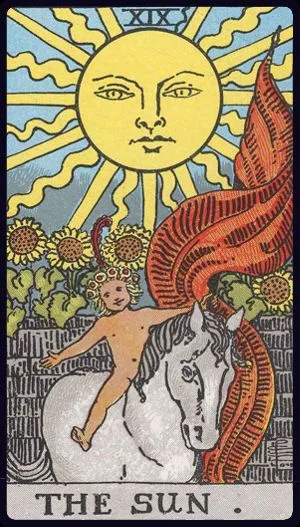 XIX The Sun
Clarity, joy, success, and vitality; what was hidden becomes obvious. The shadow is complacency and an overly rosy view of things.
-
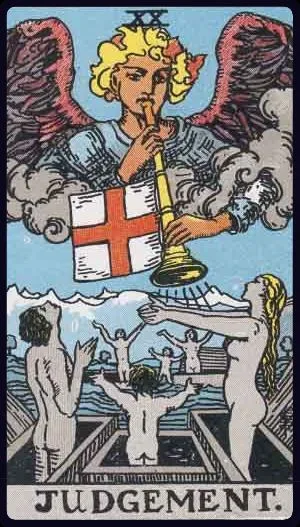 XX Judgement
Awakening and a calling: taking stock, forgiving yourself, and being ready to answer the call. The shadow is self-blame, or refusing to hear what is obvious.
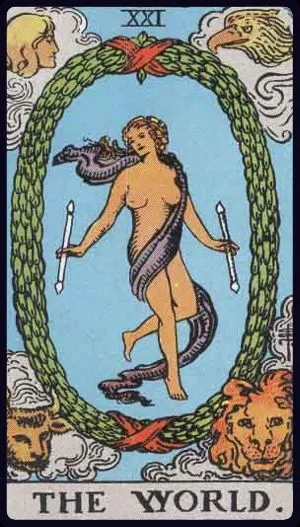
- XXI The World
The completion of a cycle, wholeness, and integration of what you have achieved. The shadow is lingering at the finish line and fearing a new round.
How a Major Arcana card changes a spread
The same spread reads differently depending on how many Major Arcana it contains. Below are practical guidelines, not strict rules.
- Many Major Arcana (two or three in a three-card spread, about half or more in a Celtic Cross): the question touches a major life theme, such as choosing a path, a relationship, a move, or a change of role. Some of the circumstances aren’t up to you, and the spread asks you to look wider and not rush small decisions.
- One Major Arcana among Minor cards: this is the spread’s main theme, the axis the story is built around. The other cards explain how it shows up in daily life.
- No Major Arcana at all: the question is about everyday, work, and current matters that you can change step by step. This is not a “weak” spread; it is a spread about practice.
- A Major Arcana card in the “advice” position: the recommendation is large in scale: not “do this” but “change your approach.” For example, Temperance advises not a decision but a pace and a balance.
A Major Arcana card also sets the “tone” for its neighbors: Wheel of Fortune next to any card adds the idea of a cycle, while The Hermit adds the need for a pause and time alone. You can try this on your own question in the three-card spread, and the article “Three-Card Spread: How to Read Past, Present, Future” shows how to read one from start to finish.
Sequences and pairs: how the arcana “talk”
Because the arcana form a journey, neighboring numbers often read as answers to each other. Here are some pairs that come up especially often.
- Wheel of Fortune (X) → Justice (XI). The cycle turns, and you face the consequences. Circumstances have changed, and now it matters to weigh honestly what follows from that and what you are responsible for.
- Death (XIII) → Temperance (XIV). After an ending comes a time for a new balance: not tearing things apart, and not rushing into something new, but calmly blending old and new.
- The Tower (XVI) → The Star (XVII). The best-known pair: after the collapse comes recovery. Not “everything will be fine,” but “after the crisis, there is something to start from.”
- The Moon (XVIII) → The Sun (XIX). Passing through uncertainty and fear toward clarity. The pair is a reminder that the fog lifts if you don’t bolt out of it in a panic.
- The Devil (XV) and The Lovers (VI). A mirror pair: both are about a bond, but The Lovers is about choice, while The Devil is about an attachment that has taken the place of choice.
- The High Priestess (II) and The Hermit (IX). Both cards are about inner knowing; the Priestess guards it, and the Hermit carries it to others.
These pairs are not “rules” but reading hints. In a real spread they may sit in different positions or never meet at all, and the meaning is always set by the question and the position.
Arcana and numerology: the link to the destiny matrix
The same 22 archetypes are used in numerology, chiefly in the destiny matrix. There, each point is assigned a number from 1 to 22, and that number is read as an arcana. For example, for a birth date of August 14, 1996, the day gives 14 (Temperance), the month gives 8 (Strength), and the year gives 1+9+9+6 = 25, so 2+5 = 7 (The Chariot). The sum of day and month, 14 + 8 = 22, gives The Fool. A detailed step-by-step calculation is in the matrix article, and you can work out your own in the Destiny matrix section.
How to read the Major Arcana: 5 tips and common mistakes
- Don’t fear the “scary” cards. Death, The Devil, The Tower, and The Moon rarely mean what their names suggest. Death is the end of a chapter, The Devil is attachment, The Tower is a sudden insight.
- Look at the picture. What is the figure doing? Where are they looking? What is the weather? This often says more than the reference-book meaning.
- Consider the position. The same card in the “past” position and the “advice” position tells two different stories.
- Don’t read too literally. The Empress isn’t necessarily “pregnancy,” and Judgement isn’t a “court case.” Meaning first, specifics second.
- Look for the journey. Ask yourself: which stage of the Fool’s journey am I in, and which card comes next?
The meaning of reversed Major Arcana is covered in the article on reversed cards, and every individual card page is collected in the tarot card meanings section. If you haven’t done your first spread yet, start with how to word your question.
Quick navigation to all 22 cards
- 0The Fool
- IThe Magician
- IIThe High Priestess
- IIIThe Empress
- IVThe Emperor
- VThe Hierophant
- VIThe Lovers
- VIIThe Chariot
- VIIIStrength
- IXThe Hermit
- XWheel of Fortune
- XIJustice
- XIIThe Hanged Man
- XIIIDeath
- XIVTemperance
- XVThe Devil
- XVIThe Tower
- XVIIThe Star
- XVIIIThe Moon
- XIXThe Sun
- XXJudgement
- XXIThe World
Ask a question, and Oracul will draw cards from the full Rider–Waite deck and explain what the Major Arcana card that appears means for you.
Frequently asked questions
How many Major Arcana cards are in tarot?
22: from The Fool (0) to The World (XXI). Together with the 56 Minor Arcana, they make up the 78-card deck.
Are the Major Arcana more important than the Minor Arcana?
Not “more important,” but larger in scale. They describe big themes and turning points, while the Minor Arcana cover everyday events and what you can change with your choices in the near term.
Why is The Fool 0 in tarot but 22 in the destiny matrix?
In classical tarot, The Fool stands outside the numbering and is marked with a zero. The destiny matrix, following Ladini’s method, counts on a 1–22 scale, so The Fool becomes number 22 and zero isn’t used. The card and its meaning are the same in both.
Does a lot of Major Arcana in a spread mean the situation is serious?
As a rule of thumb, yes: the more Major Arcana, the bigger the themes involved and the less you control what is going on. It is not a verdict, though. Even The Tower shows what is unstable and what you can rebuild.
Can I learn the Major Arcana in order, as the Fool’s journey?
Yes, it’s a handy way to remember the cards: each one answers the question the previous card raised. Just keep in mind that this “story” is a modern interpretive frame, not ancient doctrine; there are other ways to group the cards.
What does a reversed Major Arcana card mean?
Most often, that the card’s energy is turned inward, blocked, or distorted. It is not a “bad” version, just a different emphasis; there is more in our separate article on reversed cards.